Precision work on a dual laser platform is our standard
In all our studios, we rely on a variation of the stamping method — with individual parameter settings per area and external cold air cooling. This combines high single energy per pulse with a systematic grid, ensures clean overlaps and allows us to specifically choose the wavelength and fluence for each area. Only this way of working meets our premium standards.
Three methods, one goal
The actual effect of a laser — destroying the hair root through selective photothermolysis — is physically always the same. But how the pulse is delivered to the skin differs. In practice, three methods have become established:
- Gliding technique (In-Motion): the handpiece glides continuously while the laser emits multiple pulses per second.
- Stamping method: the handpiece is placed on the skin, the pulse is triggered, and the handpiece is moved along — like a stamp.
- Precision work with dual laser: stamping method with individually parameterised single pulses, often combined with external cold air cooling and wavelength changes during the session.
Gliding technique (In-Motion)

With the gliding technique, the handpiece is moved over the skin at a constant speed while the laser works at a high repetition rate (5–10 pulses per second or more). Each individual pulse has a lower energy density than with the stamping method. To achieve the same result, multiple passes over the area are necessary.
Strengths of the gliding technique:
- High working speed on large areas (legs, back).
- Even heat distribution, often described as comfortable.
- Few pauses between pulses.
Please note: The lower individual energy means multiple passes are required — otherwise, the total fluence remains too low to structurally damage the hair root. The technique requires practice to avoid missing spots. It's considered less suitable for small, precise zones (e.g. upper lip, fingers).
Stamping method — the classic approach
With the stamping method, the handpiece isn't moved continuously. Instead, it's placed and triggered pulse by pulse. Each individual pulse covers a defined area of skin with full energy density. After each pulse, the handpiece is moved by one spot width until the zone is completely covered.
Strengths of the stamping method:
- Very precise dosing per pulse.
- Clear, systematic surface coverage — no "gaps" possible.
- Higher individual fluence that thermally reaches the hair follicle per pulse.
- Ideal for sensitive and precise zones: upper lip, chin, bikini line, underarms.
Please note: This method requires a steady hand. The practitioner works with a mental grid — overlapping or overly dense pulses must be avoided. Mastering this is exactly why NiSV certification is mandatory.
Precision work with dual lasers — how we work
In our studios, we work with a variation of the stamping method, complemented by three elements:
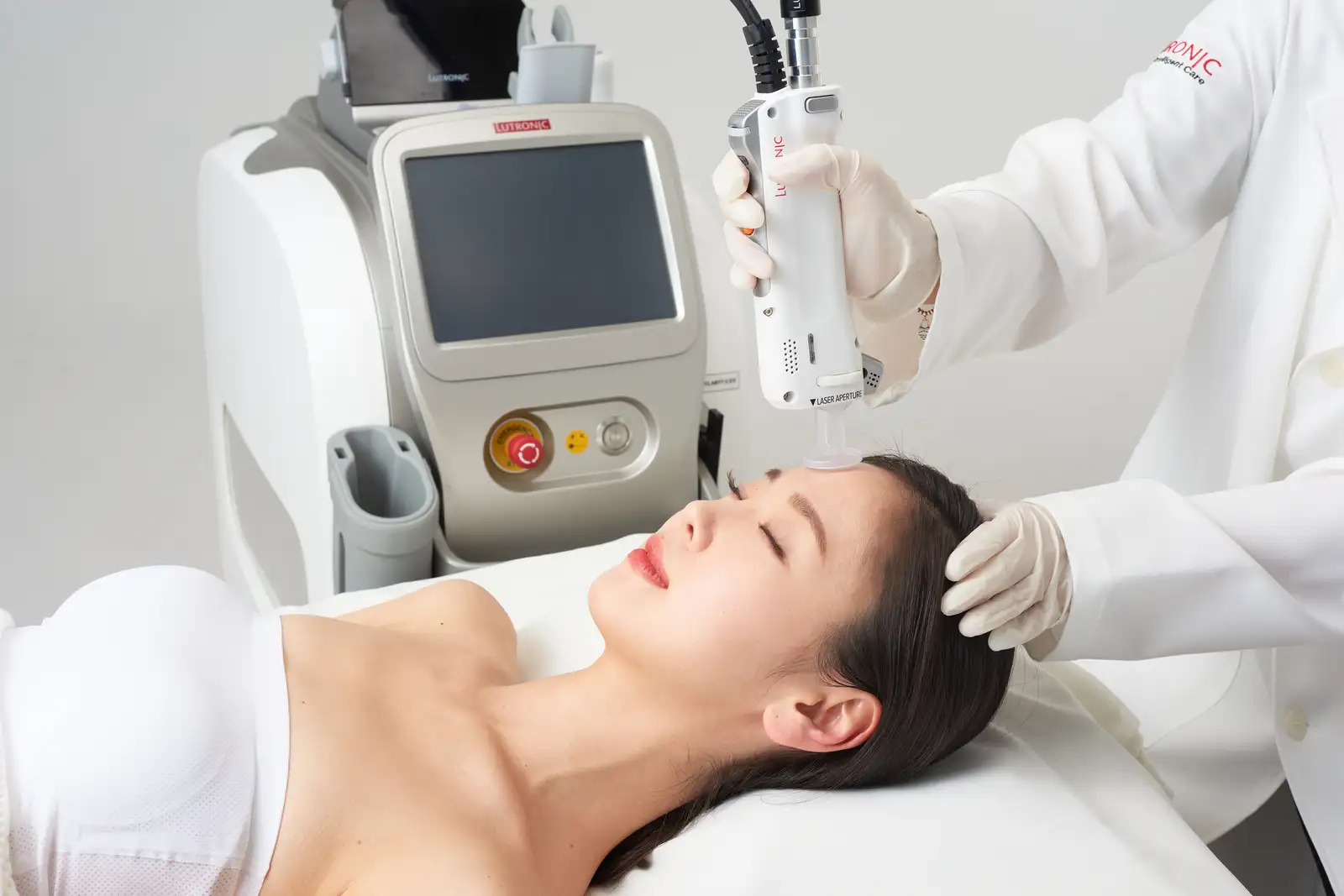
- Dual laser platform (Lutronic Clarity II or DEKA Again Pro): we choose per session — and if needed per zone — between Alexandrit (755 nm) and Nd:YAG (1064 nm). This means the wavelength is adapted to the skin and hair type, not the other way around.
- Individual parameters: Fluence, pulse duration, and spot size are documented per zone and consistently adjusted over multiple sessions.
- External cold air cooling down to –30 °C: the handpiece is low-contact; the cold air continuously cools the epidermis during the pulse sequence — without pressure on the skin, and with no contact surface to clean.
How grids and overlapping work
With the stamping method, there are two geometric traps that an experienced practitioner avoids:
- Gaps: if the pulses are too far apart, an unexposed strip of skin remains between the spots. Hair will continue to grow there.
- Excessive overlapping: if the pulses are placed too closely together, an area of skin receives double the energy. This can promote pigmentation changes or irritation — especially on dark skin.
The solution is a systematic grid: the area is divided into strips, and the strips into spots. Depending on the area, we go for a slight overlap of 5–10 % — this ensures full coverage without causing thermal stress. During your first session, we can draw the grid visibly on your skin if needed, but after that, it's just routine.
Session duration per area
How long a session takes depends on the zonesize, spot size and skin type. The following values are guidelines from our practice:
| Zone | Duration per session | Typical number of pulses |
|---|---|---|
| Upper Lip | approx. 5 minutes | 30–50 |
| Chin | approx. 5–8 minutes | 40–70 |
| Underarms (both sides) | approx. 10 minutes | 120–180 |
| Bikini Area | approx. 15 minutes | 200–280 |
| Full intimatearea | approx. 20 minutes | 280–360 |
| Lower legs (both sides) | approx. 20 minutes | 350–450 |
| Full Legs | approx. 35 minutes | 700–900 |
| Back (men) | approx. 30 minutes | 600–800 |
These times refer to a full stamping session with documented parameters. Your first treatment generally takes a little longer than follow-up sessions because we carefully test the first area.
Methods compared directly
| Criterion | Gliding technique | Stamping method | Precision work (dual laser) |
|---|---|---|---|
| Singlefluence | low to medium | medium to high | individually configured |
| Repetition rate | high | moderate | moderate, controlled |
| Treatment speed | fast | medium | medium — precision-guided |
| Area coverage | through multiple passes | systematic grid | Grid + wavelength change |
| Suitability for large areas | very good | good | good |
| Suitability for precise areas | limited | very good | very good |
| Heat sensation | evenly warm | short pulses | eased by cold air |
| Individual adjustment per pulse | little | possible | Standard |
No single method is universally better. What matters is that it suits the device, the area and your skin type — and that your practitioner has completely mastered the technique.
What makes sense for you
You don't choose the right method yourself — that's your practitioner's job. But you can check whether the studio works in a structured way:
- Do you do a skin analysis (Fitzpatrick type, hair density, hair colour) before the first session?
- Are parameters (fluence, pulse duration, wavelength) documented?
- Is cooling used consistently?
- Is a test pulse performed before treating a large zone?
- Can your practitioner explain why they're using the stamping or gliding technique on you?
These questions aren't a "test", but a sign that you understand what's happening to you. We love it when clients ask them — during the trial session just as much as later on.
Experience the precision work live
In a free trial session, we'll show you the device, method and test pulse — and answer all your questions about how we work. No obligation to buy, no contract.
 Technology