
- The short answer
- Why the wavelength matters
- Fitzpatrick skin types
- Hair colour and thickness
- Why both wavelengths
- What about the diode laser?
- How we choose the wavelength
- How the lasers feel
- Safety and NiSV
- Four typical cases
- Sun and fake tan
- The research
- Prices
- At Laserazor
- Frequently asked questions
- Sources
The essentials at a glance
- Alexandrit 755 nm: absorbed by the hair pigment about twice as strongly as Nd:YAG, first choice for skin types I to III, also for finer hair.
- Nd:YAG 1064 nm: penetrates up to four millimetres deep, protects the pigmented epidermis, safe choice for skin types IV to VI and tanned skin.
- For skin type IV, test pulses decide; they are often switched or combined during a course of sessions.
- Diode lasers at 808 nm sit in between and cover skin types I to IV; IPL doesn't have a fixed wavelength.
- Every Laserazor studio has both wavelengths in the same device, at no extra cost. The choice is made during your 0 € trial session.
The short answer
Alexandrit 755 nm is the first choice for light to medium skin (Fitzpatrick I to III) with dark hair, while Nd:YAG 1064 nm is the safe choice for dark, olive, and freshly tanned skin (types IV to VI).
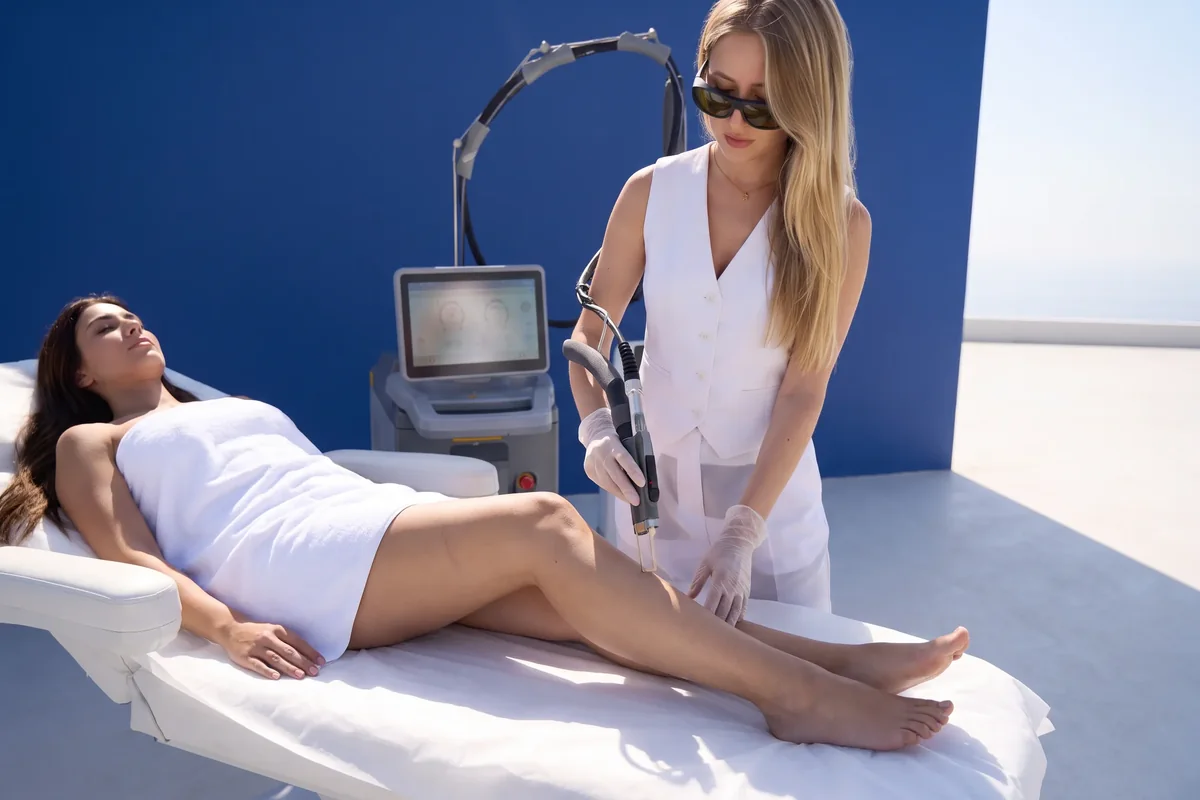
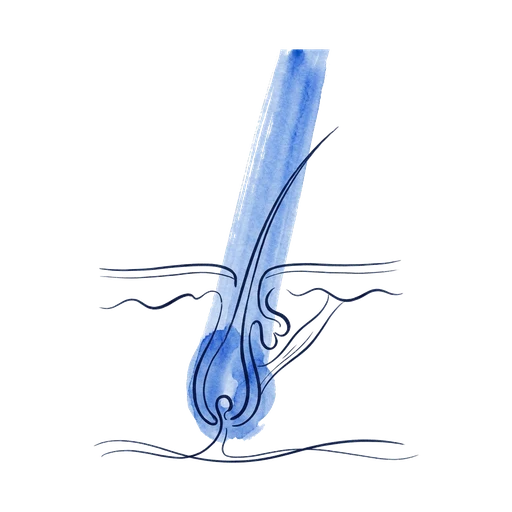
Both lasers work on the same principle: the hair pigment melanin absorbs the light, converts it into heat, and damages the root. They differ in their wavelength, which determines two things: how strongly the pigment absorbs the light and how deep it penetrates the skin. These two exact properties decide which laser suits which skin. If a studio only has one of the two, they have to compromise on certain skin types. That's why at Laserazor, you'll find both wavelengths in the same device – the Lutronic Clarity II in Berlin, München and Augsburg, and the Candela GentleMax Pro Plus in Hamburg.
What the wavelength actually does
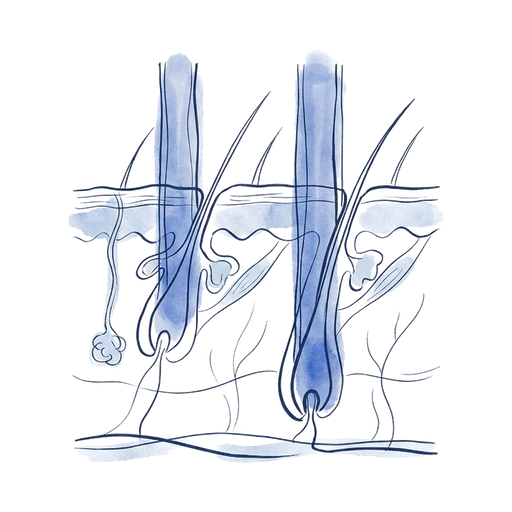
A laser's wavelength determines which structures in the skin absorb the light and how deep it goes: shorter wavelengths are absorbed more strongly by the pigment, while longer ones penetrate deeper.
Melanin absorbs light in the visible and near-infrared spectrum, with decreasing intensity at longer wavelengths. At 755 nanometres, absorption is about twice as high as at 1064 nanometres. This makes Alexandrit highly efficient on light skin tones: little energy is needed to heat the root, and fine or medium-brown hair with low pigment still responds well. The downside becomes apparent with dark skin: the epidermis itself contains a lot of melanin, absorbs a large portion of the energy, and gets hot before the root receives enough. The result is burns and pigmentation spots.
The Nd:YAG laser bypasses this problem with its longer wavelength. The epidermis absorbs significantly less energy at 1064 nanometres, and the light penetrates deeper, up to four millimetres down. The review by Ibrahimi and colleagues in 2011 therefore describes Nd:YAG as the safest wavelength for skin types V and VI. The trade-off: because the hair pigment absorbs the light less effectively, Nd:YAG requires more energy per pulse, the sensation is deeper and warmer, and fine hair responds less reliably.
Fitzpatrick skin types and the right wavelength
The Fitzpatrick scale classifies skin into six types based on its reaction to the sun, from type I, which always burns and never tans, to type VI, which is very dark and practically never burns.
The scale was developed by Thomas Fitzpatrick in 1988 and was originally intended for dosing light therapies. For laser hair removal, it's the most important guide because it describes how much melanin the epidermis contains and how it reacts to heat.
| Skin type | Description | Wavelength at Laserazor | Note |
|---|---|---|---|
| I | very light, freckles, always burns | Alexandrit 755 nm | highest efficiency, fine hair responds |
| II | light, burns easily, tans poorly | Alexandrit 755 nm | standard case in Germany |
| III | light to medium, tans slowly | Alexandrit 755 nm | temporarily Nd:YAG when tanned |
| IV | olive, tans easily | Alexandrit or Nd:YAG | Test pulses decide, often a combination |
| V | brown, tans easily | Nd:YAG 1064 nm | Alexandrit only with significantly reduced energy |
| VI | very dark | Nd:YAG 1064 nm | Alexandrit excluded |
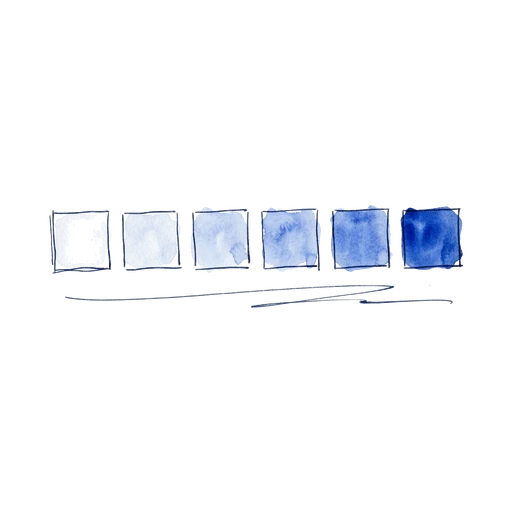
Skin type isn't about your background, but how you react to the sun. That's why our skin type check doesn't just ask about your skin colour, but how quickly you burn and how long your tan lasts. If you're unsure, you can estimate your Fitzpatrick skin type yourself before your appointment and have it checked in the studio. Find out more in our guide Laser by skin type.
Hair colour and hair thickness
Alongside your skin, your hair is the deciding factor. Dark, thick hair contains a lot of eumelanin and responds well to both wavelengths. Medium brown and dark blonde hair responds better to Alexandrit than to Nd:YAG, because the higher absorption makes up for the lower pigment. Red hair mainly contains pheomelanin, which absorbs both wavelengths less effectively, so it often only partially responds. Grey, white and very light blonde hair has no target for the light, so no laser will work here.
| Hair | Alexandrit 755 nm | Nd:YAG 1064 nm |
|---|---|---|
| black, dark brown, thick | very good | good |
| medium brown | good | medium, needs more energy |
| dark blonde with pigment | medium | weak |
| red | partially | weak |
| light blonde, grey, white | no effect | no effect |
| fine peach fuzz | weak | very weak |
Why we combine both wavelengths
Dual-wavelength lasers are devices that deliver Alexandrit 755 nm and Nd:YAG 1064 nm through the same handpiece, allowing our specialist to choose the right wavelength for each zone, skin type and session.
In practice, we often switch it up during a course of treatments. A typical scenario: skin type III, treated with Alexandrit in winter, and with Nd:YAG in summer after a holiday, so your tan doesn't force you to take a break. Another example: skin type IV, where the first few sessions with Nd:YAG thin out the thick, dark hair, and the final sessions with Alexandrit target the remaining finer hairs. For men with dark skin and thick back hair, Nd:YAG is the go-to choice throughout. Read more in our guide on laser hair removal for men.
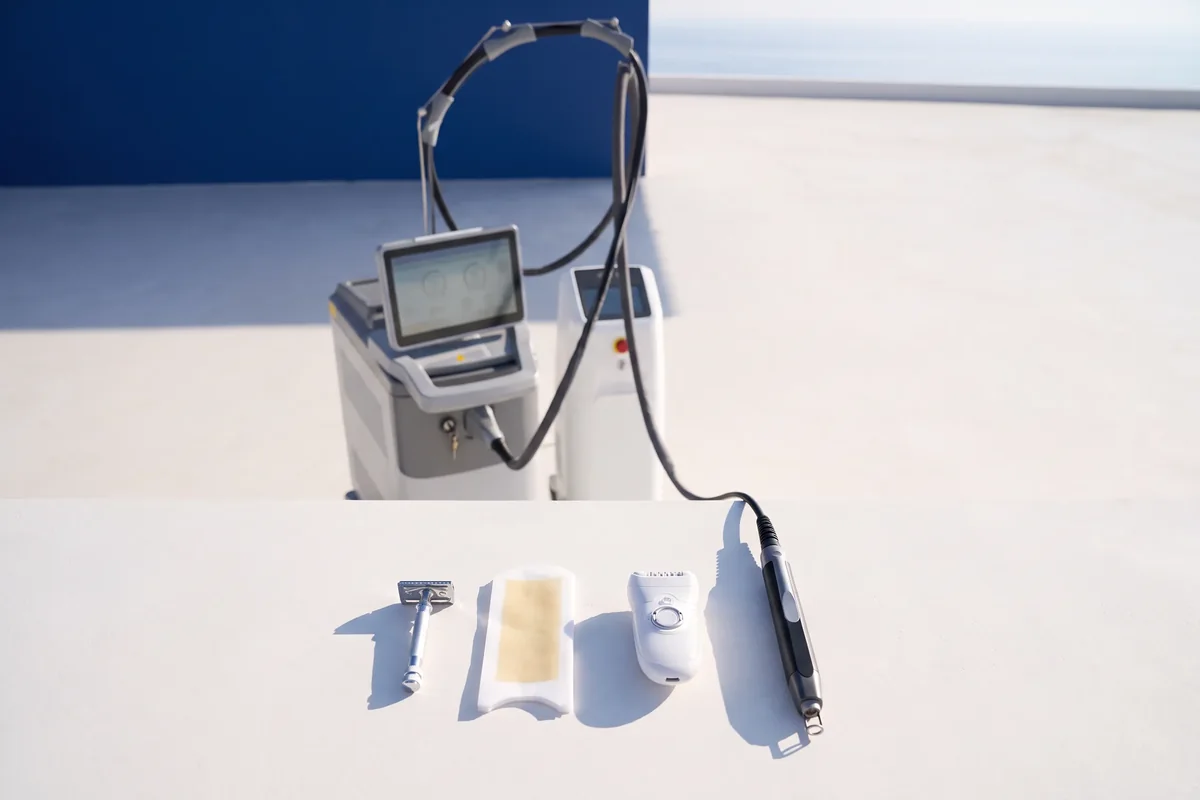
What a studio doesn't have is just as important. If they only use a diode laser or just IPL, they either can't treat dark skin at all, or only with such low energy that barely anything happens. That's why asking about the wavelength is the most important question before booking. A studio that can't answer it usually works with IPL.
And what about the diode laser?
Diode lasers with 808 to 810 nanometres sit between the two wavelengths and are widely used in beauty salons because the devices are cheaper. They cover skin types I to IV, absorb pigment slightly less effectively than Alexandrit, and don't penetrate as deeply as Nd:YAG. The Cochrane review by Haedersdal and Gøtzsche 2006 sees Alexandrit and diode lasers as equally effective, showing around 50 percent hair reduction up to six months post-treatment in the evaluated studies. The difference is more noticeable in practice: many diode devices use a gliding motion with low energy and multiple passes, which requires more sessions for fine hair. You can read the detailed comparison in our guide Alexandrit laser vs. diode laser.
How we find the right wavelength for you
- Skin type check. Our specialist determines your Fitzpatrick type and asks about sun exposure in the last two weeks, fake tan, medications and skin conditions.
- Hair check. The colour, thickness and density of the hair in the zone. Thick, dark hairs can handle higher energies and respond faster than fine ones.
- Test pulses. A few pulses with Alexandrit on a small area, or with Nd:YAG for skin types IV to VI or tanned skin. We wait a few minutes and assess the reaction: redness around the follicles is what we want, while widespread redness or swelling means we need less energy or the other wavelength.
- Treatment. We treat the entire zone using the determined wavelength and energy, with cooling right before every pulse.
- Series. Before every subsequent session, we check your tan and the reaction from the last session, and adjust the wavelength and energy accordingly.
All of this is part of the 0 € trial session at Laserazor. You don't just test a small patch, but a complete area, for example underarms for normally 79 € or full intimate for normally 149 €, and see for yourself how the hair falls out after two to three weeks.
How the two lasers feel
Alexandrit feels like a quick, warm pinch on the surface with each pulse, because the energy targets the hair close to the surface. Nd:YAG goes deeper and feels warmer; many describe a brief sting that quickly fades. For both: the cooling right before the pulse is what makes the difference to how it feels. In Hamburg, the Candela machine cools with a cryogen spray a few milliseconds before each pulse, while in the other studios we work with external Cryo cooling. The intimate area and upper lip are more sensitive than legs and underarms, regardless of the wavelength. Find out more in our guide to low-pain laser hair removal.
Safety: what the NiSV requires
The NiSV is the German regulation for protection against the harmful effects of non-ionising radiation. Since the end of 2020, it has required that laser and IPL treatments on humans may only be performed by people with certified expertise.
The regulation text (NiSV 2018) distinguishes between cosmetic treatments like hair removal, which are allowed in studios with the right expertise, and treatments that intentionally damage the skin, which are reserved for doctors. The Federal Office for Radiation Protection (BfS) emphasises that choosing the right wavelength and energy for your skin type is the most important protection against burns and pigmentation issues. At Laserazor, every specialist who treats you has NiSV certification. In Berlin, München and Augsburg we work with the Lutronic Clarity II (Alexandrit 755 nm and Nd:YAG 1064 nm), and in Berlin and München also with the DEKA Again Pro, while in Hamburg we use the Candela GentleMax Pro Plus. All devices are Class IIb medical products with cooling right before every pulse.
Ask three things in every studio: What wavelength does your laser use? Is it classified as a Class IIb medical device? Does the person treating me have NiSV certification? Anyone who can clearly answer all three questions is running a reputable business.
Four typical cases from the studio
| Case | Skin and hair | Wavelength | Progress |
|---|---|---|---|
| Underarms, Type II | light skin, dark brown hair | Alexandrit 755 nm throughout | significantly less after four sessions, six to eight in total |
| legs, type III in summer | medium skin, tanned in August | Nd:YAG in summer, Alexandrit from October | no break needed, eight sessions |
| back, type IV, man | olive skin, thick black hair | Nd:YAG for the first four, Alexandrit for the finer remaining hair | eight to ten sessions |
| full intimate area, type V | brown skin, coarse hair | Nd:YAG throughout | good response, eight to ten sessions |
These four examples represent everyday life in our studios. They show that choosing the wavelength isn't a one-off decision, but something we reassess at every session. Skin type, tan, and how your skin reacted to the last session are factored in every time. A studio with only one wavelength can't offer this and might have to cancel your appointment or use too little energy if in doubt.
Sun, sunbeds and fake tan
A tan increases the melanin in the top layer of skin, meaning more of the laser light turns into heat at the surface before it even reaches the root.
This is the critical point for the Alexandrit laser: with freshly tanned type II or III skin, the top layer absorbs so much energy that it can cause redness, blisters or dark spots, while the root doesn't get enough. That's why before every Alexandrit session, the rule is: no sun on the area, no sunbeds, and no fake tan for two weeks. The Nd:YAG laser is less sensitive to a tan because the top layer of skin absorbs less of its light. That's why it's the wavelength we use to treat tanned clients in the summer without interrupting their sessions. We only wait one to two weeks if you have sunburn or a very fresh tan. After every session, regardless of the wavelength, SPF 50 protects the treated skin for two weeks.
Fake tan is a special case. It dyes the top layer of skin and tricks the laser into seeing pigment that doesn't actually protect against the sun. It should be completely washed or scrubbed off before a session, otherwise you risk getting spots. We'll ask you about this during your skin type check.
What the studies say
The Cochrane review by Haedersdal and Gøtzsche 2006 evaluated randomised trials on lasers and IPL. For Alexandrit and diode lasers, the authors found a hair reduction of around 50 percent up to six months after treatment, mostly after one to three sessions. For Nd:YAG and IPL, the data was thinner, with fewer studies and shorter observation periods. This isn't evidence against Nd:YAG, but rather an indication that the studies at the time were mainly conducted on light-skinned participants. The reviews by Ibrahimi and colleagues 2011 and Gan and Graber 2013 summarise the research published since then and come to the same conclusion as clinical practice: Alexandrit for light skin, Nd:YAG for dark skin, with cooling and adjusted energy as the most important safety factors for both. The studies usually measure results after one to three sessions. After a full series of eight to twelve sessions, the zone is permanently¹ hair-free.
What both wavelengths cost
At Laserazor, there's no extra charge for Nd:YAG. The prices apply per complete area and wavelength, in all studios, with packages for 3, 5 or 10 sessions that are valid for 24 months.
| Zone | Duration | 1 session | Pack of 3, per session | Pack of 5, per session | Pack of 10, per session |
|---|---|---|---|---|---|
| Upper Lip | 10 min | 59 € | 49 € | 39 € | 37 € |
| Underarms | 10 min | 79 € | 65 € | 51 € | 48 € |
| Bikini Area | 10 min | 99 € | 81 € | 63 € | 59 € |
| Full intimate (women or men) | 15 min | 149 € | 121 € | 93 € | 86 € |
| Full Legs | 45 min | 319 € | 257 € | 195 € | 180 € |
| Full Back | 40 min | 269 € | 217 € | 165 € | 152 € |
| Underarms + full intimate area | 15 min | 149 € | 139 € | 129 € | 119 € |
Excerpt from the price list featuring all 31 areas, as of 9 September 2026. Prices are per full area and valid in all studios; packages are valid for 24 months.
Both lasers in every Laserazor studio
Laserazor treats in six studios: Berlin Pestalozzistraße 13 and Danckelmannstraße 24 (both Charlottenburg), München Steinstraße 57 (Haidhausen) and Westendstraße 142, Augsburg Unter dem Bogen 2 and from 26 October 2026 Hamburg Poststraße 36. In every studio, Alexandrit 755 nm and Nd:YAG 1064 nm are available in the same device. The prices are the same for both wavelengths: underarms 48 €, full intimate 86 €, full back 152 € per session in a 10-session package, all areas under Prices.
Which laser is right for you? Find out in your 0 € trial session
Skin type check, test pulses with 755 and 1064 nm and one complete area for 0 €. No purchase, no subscription, no obligation.
Frequently Asked Questions
Which laser is better, Alexandrit or Nd:YAG?
Neither is better across the board. Alexandrit 755 nm is more efficient on light to medium skin and also picks up finer hairs. Nd:YAG 1064 nm is safer for dark and tanned skin because the top layer of skin absorbs less energy. At Laserazor, both are in the same device, and your specialist chooses based on your skin type and session.
Which laser is right for skin type IV?
With olive skin, test pulses help us decide. Many people tolerate Alexandrit well on a lower energy setting, while others might develop pigmentation spots and are treated with Nd:YAG instead. We often combine the two: Nd:YAG for the first few sessions when hair is thickest, and Alexandrit for the finer hairs towards the end of your course.
Can I have laser treatment if I have a tan?
Yes, using Nd:YAG. If you've just caught the sun over the weekend, we'll wait a week or two. If you have a tan all year round, we'll use Nd:YAG for all your treatments.
Is Nd:YAG more painful than Alexandrit?
Nd:YAG requires more energy per pulse, and the heat is generated deeper in the skin. Many people describe it as a quick sting rather than a pinch. The cooling applied right before each pulse makes both options very manageable – you won't need any numbing cream.
Will I need more sessions with Nd:YAG?
Often one or two more, as the hair pigment absorbs the light less effectively. With thick, dark hair, the difference is minimal. Overall, you'll still need eight to twelve sessions, spaced six to eight weeks apart.
What about the diode laser?
Diode lasers at 808 to 810 nm sit somewhere in the middle and cover skin types I to IV. They're effective but less flexible: they aren't the safest choice for very dark skin, and they aren't the most efficient for fine hair.
How can I tell which laser a studio uses?
Ask for the wavelength in nanometres and the name of the machine. Alexandrit uses 755 nm, Nd:YAG uses 1064 nm, and diode uses 808 nm. If they can't tell you the wavelength, they're usually using IPL – a flashlamp without a fixed wavelength.
Does Nd:YAG cost more than Alexandrit?
No. At Laserazor, the same area prices apply for both wavelengths, for example underarms 48 € or full intimate 86 € per session in a 10-session package.
Is Alexandrit dangerous for dark skin?
For skin types V and VI, yes, because the epidermis absorbs so much light that there's a risk of burns and pigmentation spots. That's why we treat these skin types exclusively with Nd:YAG. For type IV, test pulses decide.
Sources
The expert statements in this guide are based on the following sources. For each source, you'll find who wrote it, when it was published and its status.
- Fitzpatrick TB (1988). The validity and practicality of sun-reactive skin types I through VI. Archives of Dermatology, Volume 124, pages 869 to 871. peer-reviewed article. View source. Defines the six skin types based on their reaction to the sun, which remain the basis for choosing wavelength and energy today.
- Ibrahimi OA, Avram MM, Hanke CW, Kilmer SL, Anderson RR (2011). Laser hair removal. Dermatologic Therapy, Volume 24, pages 94 to 107. peer-reviewed review article. View source. Overview of mechanism of action, wavelengths (Alexandrit 755 nm, diode 800 to 810 nm, Nd:YAG 1064 nm), skin types, cooling and side effects; Nd:YAG is considered the safest choice for dark skin types.
- Haedersdal M, Gøtzsche PC (2006). Laser and photoepilation for unwanted hair growth. Cochrane Database of Systematic Reviews, Issue 4, CD004684. systematic review (Cochrane). View source. Evaluates randomised trials: Alexandrit and diode lasers show a hair reduction of around 50 percent up to six months after treatment; data for IPL and Nd:YAG was thinner at the time. Long-term data over years was missing in the evaluated studies.
- Gan SD, Graber EM (2013). Laser hair removal: a review. Dermatologic Surgery, Volume 39, pages 823 to 838. peer-reviewed review article. View source. Summarises research, side effects and treatment parameters; confirms the role of the hair cycle for the number of sessions.
- Anderson RR, Parrish JA (1983). Selective photothermolysis: precise microsurgery by selective absorption of pulsed radiation. Science, Volume 220, pages 524 to 527. peer-reviewed article. View source. Describes the principle behind all laser hair removal: light of a suitable wavelength and pulse duration specifically heats pigmented structures, while the surrounding tissue remains unharmed.
- Federal Government (Regulation) (2018, in effect since 31.12.2020). Ordinance on Protection against the Harmful Effects of Non-Ionising Radiation in Human Applications (NiSV). Federal Law Gazette 2018 Part I, page 2034. statutory order. View source. Regulates who is allowed to use lasers and IPL on humans. For hair removal, proven expertise is mandatory; treatments that intentionally damage tissue are reserved for doctors.
- Federal Office for Radiation Protection (BfS) (continuously updated). Laser and IPL hair removal: Information from the Federal Office for Radiation Protection. bfs.de, optical radiation topic area. official information. View source. Explains the operating principle and risks (redness, pigment changes, burns from incorrect energy) and recommends application by qualified professionals.
- Laserazor (as of 9. September 2026). Laser hair removal price list, all 31 zones. laserazor.de/preise. own price list. View source. Single sessions and packages of 3, 5 and 10 sessions, valid in all studios, 24-month duration.
¹ 'Permanent' means: after a complete series, no hair that the laser has reached will grow back in the treated zone. No laser can reach grey, white and very light hairs. Hormonal changes can trigger new growth, in which case a top-up session is usually enough.

NiSV-certified specialists from the Laserazor studios in Berlin, München, Augsburg and Hamburg. They treat clients every day using Alexandrit and Nd:YAG lasers and write down exactly what they explain in the studio: no marketing fluff, just facts with sources.
This guide provides general information and doesn't replace medical advice, diagnosis or treatment. Laser hair removal is a cosmetic procedure; if you have skin conditions, take medications that increase light sensitivity, are pregnant or have unexplained hair growth, it makes sense to get medical advice first.

 Technology