











The short answer.
For a permanent result1 at Laserazor, you usually need 8 to 12 sessions at intervals of 4 to 8 weeks. After 2–3 sessions, you'll already see a significant reduction in hair.
Why not less?
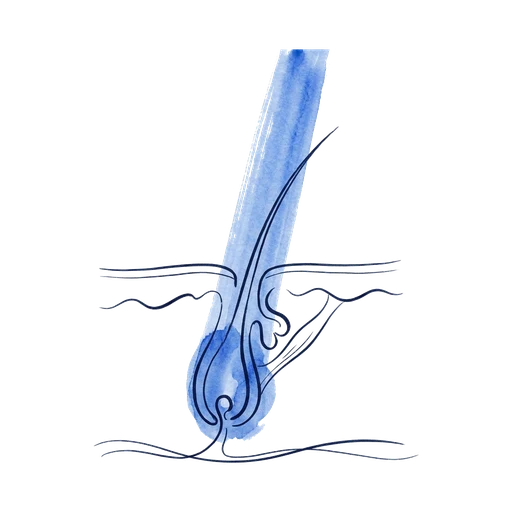
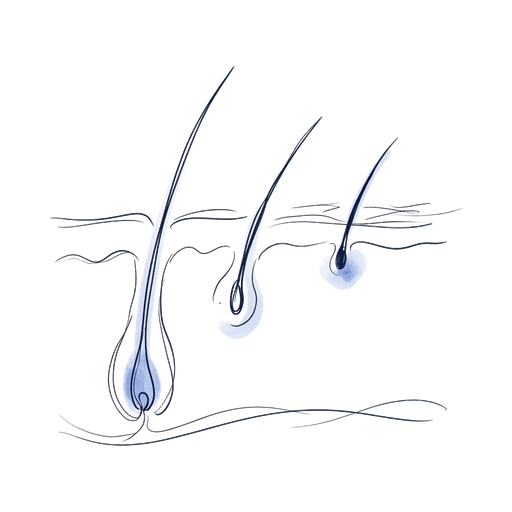
The reason lies in the hair cycle. Every hair goes through three phases:
- Anagen (growth phase) — only now is the hair sensitive to the laser, because melanin is active in the root.
- Catagen (transitional phase) — short, approx. 2 weeks.
- Telogen (resting phase) — up to several months, the hair is "detached" from the root.
At any given time, only about 20–30 % of your hair is in the anagen phase. That's why we only target this amount per session. The rest of the hair needs to enter its anagen phase first — and that takes 4 to 8 weeks.
Session intervals by area.
| Zone | Interval | Sessions |
|---|---|---|
| Face (upper lip, chin, cheeks) | 4 weeks | 8–10 |
| Underarms, bikini, intimate | 4–8 weeks | 6–8 |
| Arms, chest, back | 4–8 weeks | 6–8 |
| Legs | 8 weeks | 6–8 |
What affects the number of sessions?
- Skin type & hair colour: dark hair on light skin = most effective, fewer sessions needed.
- Hormones: PCOS, menopause or hormone therapies usually increase the number of sessions by 2–4.
- Area: the face reacts more slowly than the underarms.
- Hair density: the denser, the more sessions needed.
How many treatments are required on average?
For permanent results, you'll usually need 8 to 12 sessions. This number is an average and varies depending on your individual characteristics. For some people, 8 to 12 treatments are enough, while others need 10 to 12 sessions. Hair colour plays a key role: dark hair absorbs the laser energy much better than light hair, which often means fewer sessions are needed. Hair density also affects the treatment time — dense hair usually needs more treatments than fine hair.
Another important factor is your hormone balance. Hormonal fluctuations caused by medication, pregnancy, or conditions like hirsutism or hypertrichosis can affect hair growth and increase the number of sessions needed. At Laserazor, we offer treatments for all 31 zones and tailor your treatment plan to you.
What are the ideal intervals between sessions?
Leaving too little time between sessions doesn't help, as not enough hair will have entered the growth phase yet. Leaving too much time delays your results. The ideal intervals depend on the zone and your individual hair growth.
Intervals for face and body
For facial areas like the upper lip, cheeks or chin, we recommend intervals of 2 to 6 weeks. Facial hair has shorter growth cycles, which is why more frequent treatments make sense. During the first few sessions, the intervals can be shorter, later they often extend to 4 to 6 weeks. For body areas like legs, underarms, arms or the back, longer intervals of 4 to 8 weeks are ideal. After the first 3 to 4 sessions, the intervals can often be extended to 8 to 10 weeks, as hair growth is already reduced.
Customised interval adjustments
Everyone has individual hair growth. After the first two to three sessions, we can see how your skin reacts to the treatment and how quickly new hair grows back. Based on these observations, we optimise the intervals. If hardly any new hair grows back, the time until your next session can be extended. This flexible planning ensures you don't come in too early or too late for your next treatment.
Differences between body areas.
For the face and head, including the upper lip, chin and cheeks, shorter treatment cycles of 2 to 6 weeks are necessary. These areas have faster hair growth cycles and often react more sensitively to hormonal changes. They need an average of 8 to 12 sessions.
Legs, forearms and back have longer growth cycles. Intervals of 6 to 8 weeks between treatments are ideal; usually, 8 to 12 sessions are enough. The intimate area and bikini line fall somewhere in between: medium cycles of 4 to 12 weeks; the bikini line needs an average of 8 to 10 sessions. The hair in this area is often thicker and darker, making laser treatment more effective — however, hormonal factors can have a stronger impact here.
What factors affect the treatment duration?
Skin type and laser technology
Alexandrit (755 nm): wavelength for light skin types Fitzpatrick I–III, works best on light to medium skin tones with dark hair. Nd:YAG (1064 nm): deeper penetrating wavelength, safe for dark skin types IV–VI because it largely bypasses the skin's melanin. At Laserazor, we use dual-laser systems that combine both technologies. This way, we treat every skin type optimally. More details in the comparison between Alexandrit and diode lasers.
Hormonal influences on the treatment process
Hormones largely control hair growth. Fluctuations caused by puberty, pregnancy, menopause or hormonal contraceptives can extend the treatment time. PCOS (polycystic ovary syndrome) — a hormonal disorder that can cause increased hair growth in women — also affects hair growth and may require additional sessions. For men, testosterone levels play an important role when treating the back, chest or stomach. Athletes benefit especially from permanent hair removal, but may need to expect longer treatment cycles.
Hair colour and density
Dark, thick hair absorbs the laser energy best — it contains more melanin. Light, blonde or red hair contains less melanin and might need more sessions. Very fine vellus hair is harder to treat than thick terminal hair. Grey or white hair contains practically no melanin and can't be treated with conventional laser technology.
What happens between treatments?
After every laser session, the treated hair falls out within 1 to 3 weeks. This is normal and shows that the treatment is working. The hair follicles have been damaged by the laser energy and can no longer hold the hair. During this time, hair will continue to grow back — this is the hair that was in the resting or transitional phase at the time of treatment. They will be treated in the following sessions.
Between sessions you can shave, but do not wax, pluck or epilate. These methods remove the hair root, which the laser needs for the treatment. Shaving is allowed and even recommended. You will receive important tips on preparing for your treatment during your initial consultation.
How many sessions for full-body treatments?
During full-body hair removal, we treat several areas at once. The average number is 8 to 12 sessions. The full-body package includes the five premium areas: bikini line, outer labia, pubic area (mons pubis), buttock crease, and underarms — exactly the areas included in the VIP laser flat rate. Each session takes around 60 minutes, depending on hair density and skin type.
For full-body treatments, Laserazor offers attractive flat-rate pricing models. From 99 Euro per month, you can get unlimited treatments on the five flat-rate zones. This makes the treatment easy to plan and affordable. You can find an overview of all prices on our website.
Touch-up sessions: Are they necessary?
After completing your main treatment, most hair follicles are permanently inactive. However, individual follicles can reactivate, especially with hormonal changes. Most people need one or two top-ups 1 to 2 years after their last main treatment. Hormonal changes — pregnancy, menopause, new medication or weight changes — are the most common reason. At Laserazor, we're happy to advise you on the permanence of laser hair removal.
Treatment planning at Laserazor: Individual cycles.
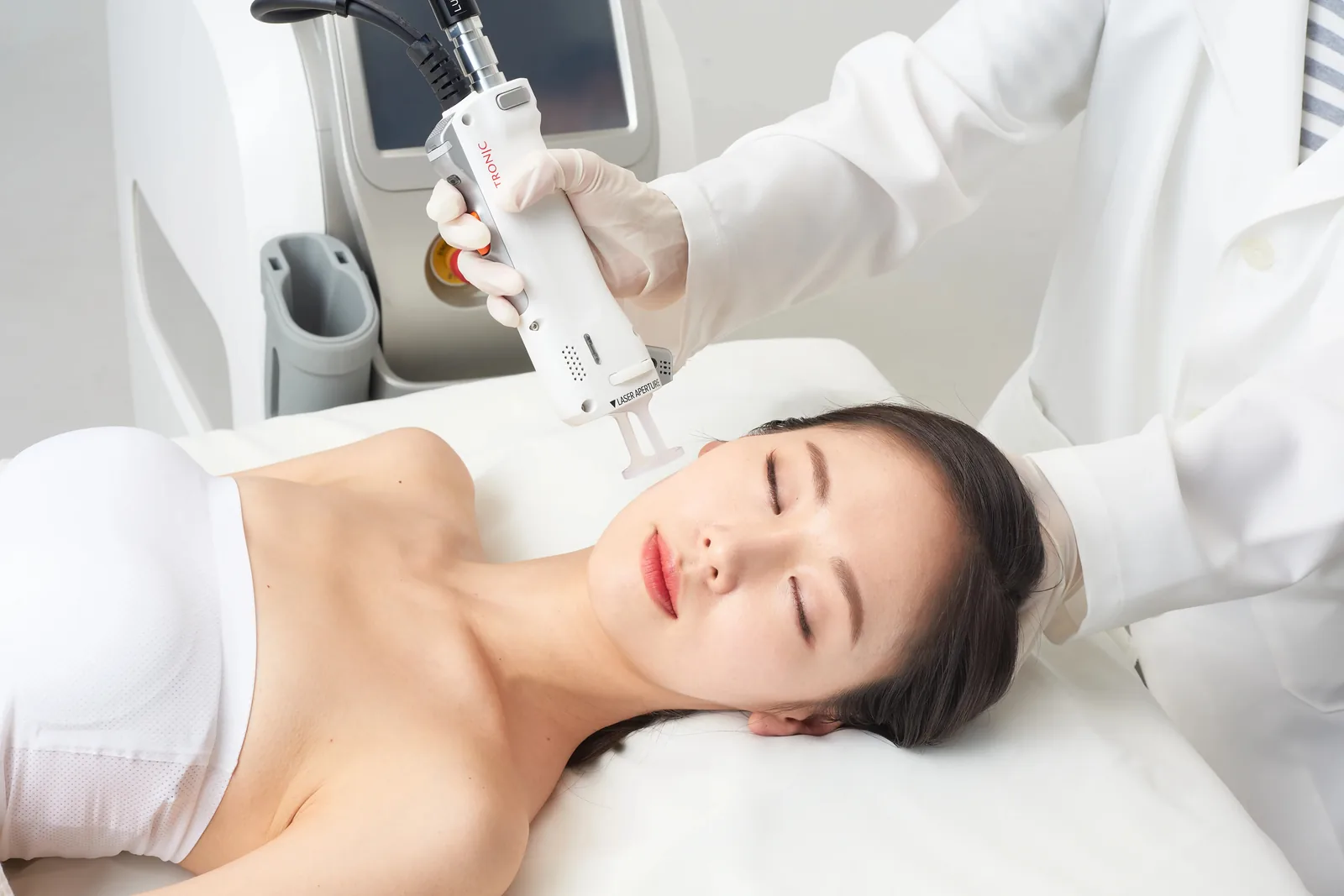
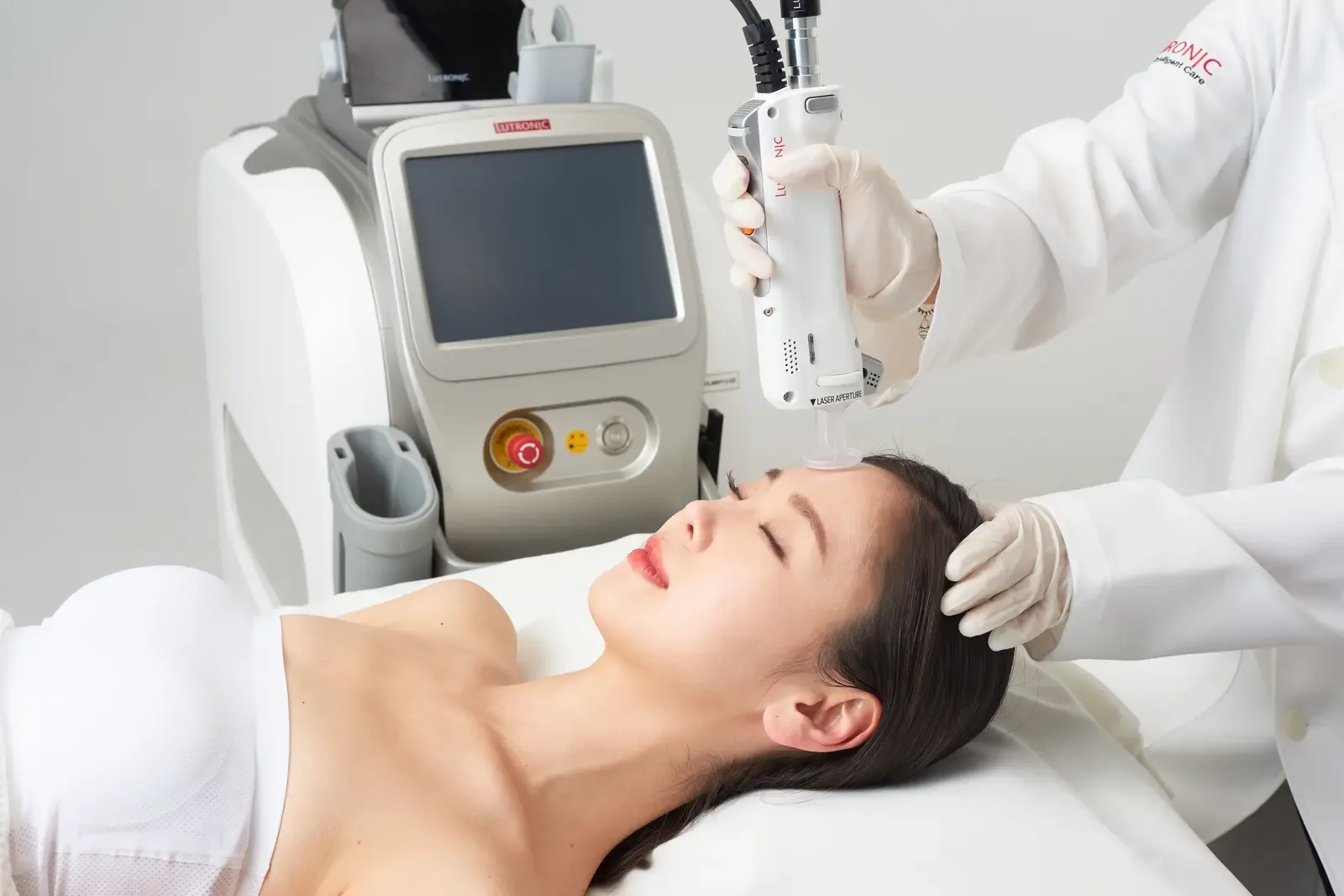
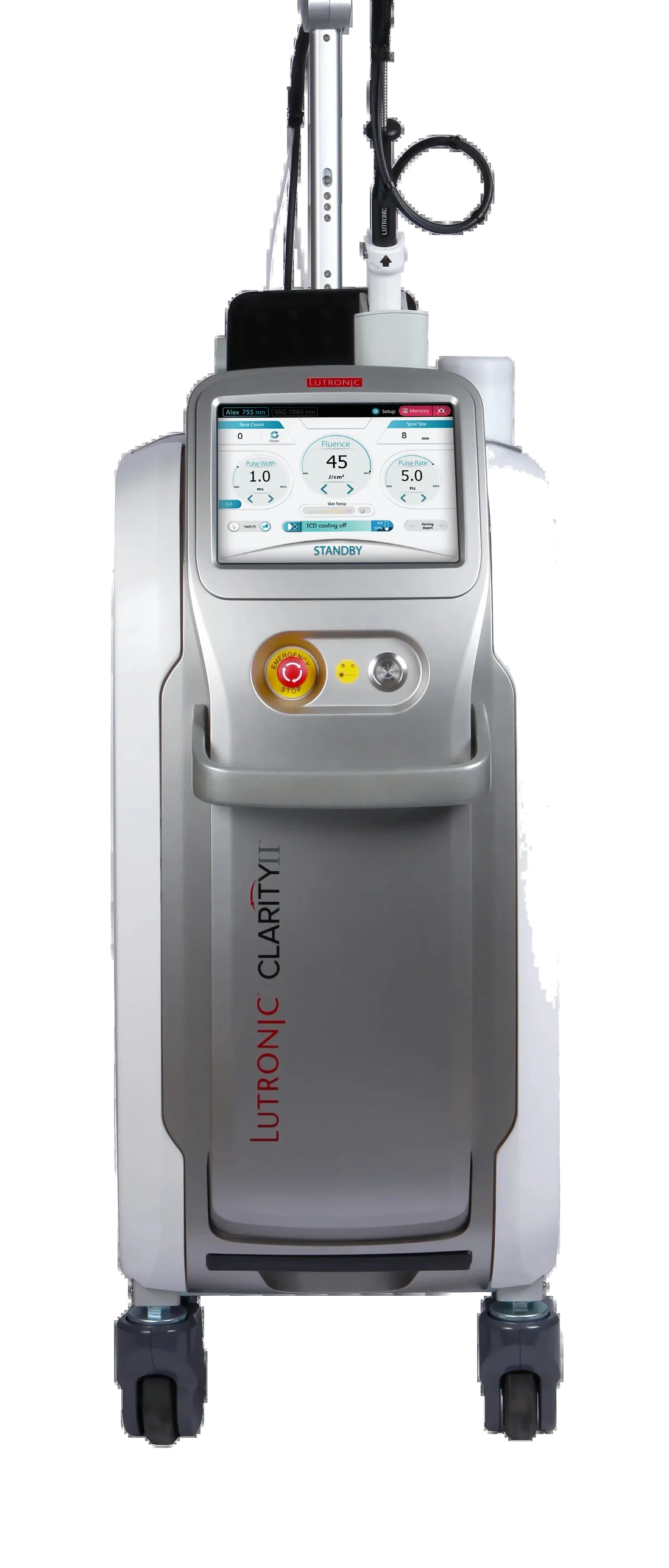
Every treatment starts with a free initial consultation and skin type analysis. We take the time to fully understand your skin, your hair growth, and your goals. Based on this, we create a personalised treatment plan. We use state-of-the-art Alexandrit and Nd:YAG dual lasers (Lutronic Clarity II, DEKA Again Pro) — CE-certified with the highest safety standards. Our external Cryo cooling ensures a low-pain treatment that is gentle even on sensitive areas of skin.
All our staff hold the legally required NiSV certification (MPAV §5) — the Non-Ionising Radiation Protection Ordinance, mandatory nationwide since 2021. Visit us in one of our six studios in Berlin, München, Augsburg or Hamburg.