
The essentials at a glance
- Benefits: permanently¹ hair-free after the course, no ingrown hairs, ten to 45 minutes per session with no downtime.
- Over ten years, a course of laser treatments is cheaper than waxing: full legs 1.800 € in a 10-session package versus around 6.000 € for waxing.
- Disadvantages: eight to twelve sessions over about one to one and a half years, a two-week break from the sun per session, no instant results.
- No effect on grey, white and light blonde hair; hormones can trigger new growth.
- Side effects are mild and temporary with NiSV certification and cooling; risks arise from incorrect energy settings and home devices.
What we're talking about: laser hair removal in one paragraph
Laser hair removal is a process where light pulses of a specific wavelength are absorbed by the hair pigment, heating the hair root and reducing regrowth long-term.
The principle is called selective photothermolysis and was described by Anderson and Parrish 1983. The laser only works on actively growing hair, which is why each area needs multiple sessions. At Laserazor, we use Alexandrit 755 nm and Nd:YAG 1064 nm in a single device, with cooling before every pulse and specialists with NiSV certification. You can read exactly how this works in our Alexandrit-Laser guide. This page is all about whether it's worth it for you.
The benefits
1. The results last for years, not days
Shaving lasts two days, waxing three to four weeks. After a complete laser series, the area is permanently¹ hair-free. The Cochrane review by Haedersdal and Gøtzsche 2006 shows a hair reduction of around 50 percent up to six months after treatment for Alexandrit and diode lasers in the evaluated studies, although most studies only looked at single sessions. In practice, with eight to twelve sessions, the area is hair-free in the end because each session targets the next group of growing hairs.
2. No more razor burn, ingrown hairs and spots
If you shave or wax regularly, you'll be familiar with redness, ingrown hairs and minor inflammation, especially on the bikini line, neck and underarms. The laser removes the root cause: where no hair grows, no hair can become ingrown. Many clients book for exactly this reason – find out more in our guide Laser for razor burn and ingrown hairs.
3. Fast, large-area, with no downtime
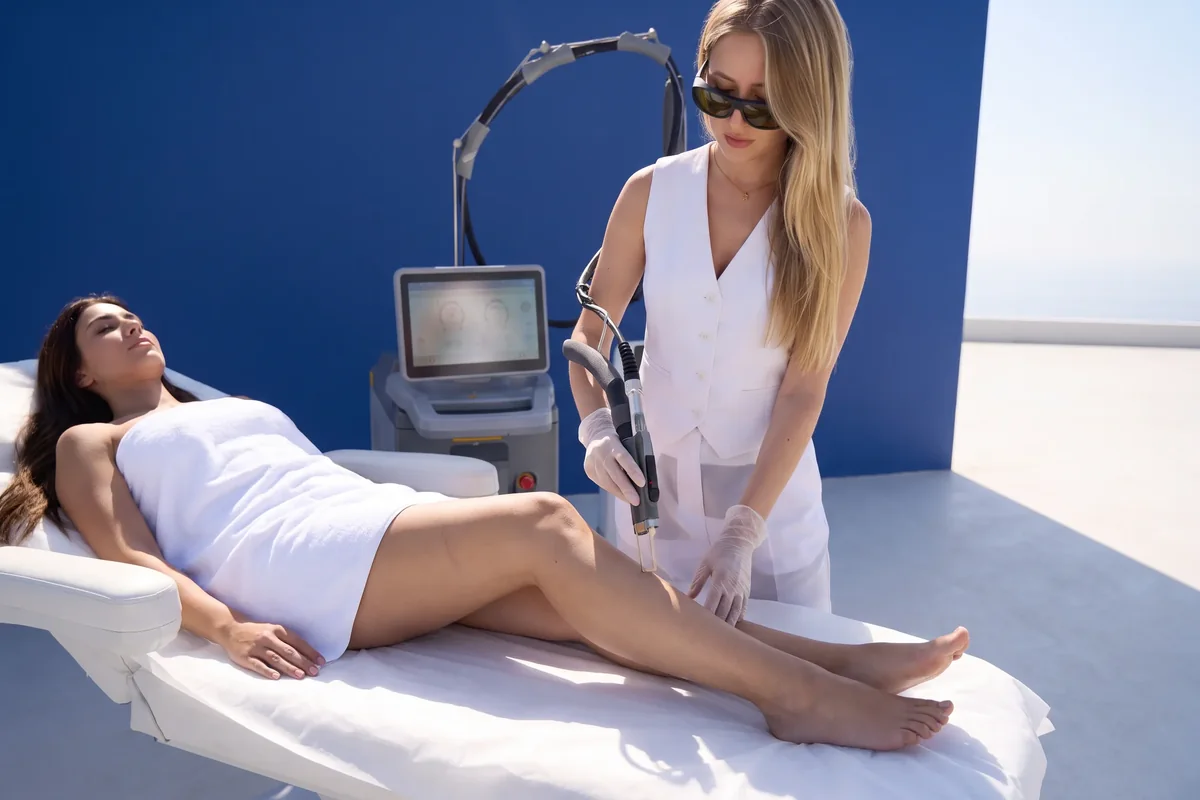
Underarms take ten minutes per session, full legs 45 minutes, full body three hours. There are no wounds, no gel, no recovery time. You can pop in during your lunch break and head straight back to the office. You just need to skip sports, saunas and the sun on the day of your treatment.
4. Cheaper than waxing over the years
These figures are rounded estimates for full legs. Ten sessions in a 10-session package cost 1.800 €, ten years of waxing around 6.000 €. Then there's the time: if you shave for five minutes a day, you spend 30 hours a year doing it. Exact prices per area can be found under Prices, and a breakdown in our guide Prices 2026.
5. For all skin types, if the device has two wavelengths
With Alexandrit 755 nm and Nd:YAG 1064 nm, you can treat all six skin types according to Fitzpatrick 1988, including dark and tanned skin. Things were different twenty years ago, and a lot of the warnings online date back to that time. Our guide Alexandrit or Nd:YAG explains which laser suits which skin.
6. Easily tolerable with cooling
You'll feel a quick, warm pinch with each pulse. The cooling right before every pulse takes away most of the heat. Nobody needs numbing cream, not even for the intimate area. Most people say after their first session that they thought it would be worse.
7. Regulated by the NiSV
Since late 2020, lasers for hair removal can only be used by people with proven expertise (NiSV). This protects you from practitioners who just guess the energy settings. Always ask any studio for the credentials of the person treating you.
The downsides

No method is without its downsides, and a studio that doesn't mention any is hiding something. The following points apply to any laser hair removal, regardless of the provider.
1. It takes time: eight to twelve appointments over a year
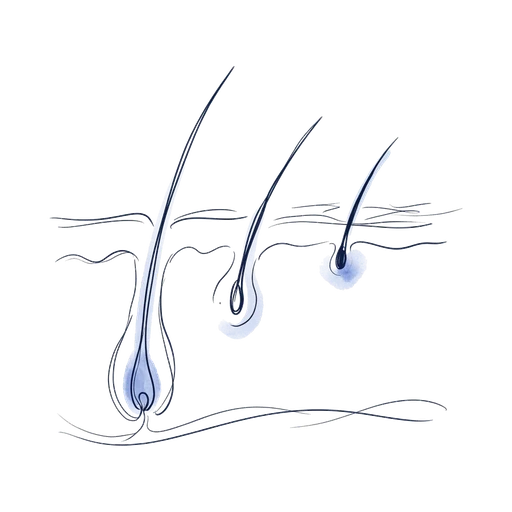
The laser only targets hairs in the growth phase, and that's only 20 to 30 percent at a time per area. That's why eight to twelve sessions are needed at intervals of six to eight weeks, making it nine to fifteen months in total. If you want to be smooth for your holiday in four weeks, you're too late. The area will get noticeably thinner after each session, but the final result takes patience.
2. No instant results
Right after the session, the area looks just like it did before. The treated hairs only fall out after two to three weeks. You can shave in the meantime, but no waxing or plucking. This is the hardest phase for many people, because the shedding looks like regrowth at first.
3. Sun and tanning slow things down
Sun on the area is a no-go for two weeks before and after each session, followed by SPF 50. A fresh tan increases the pigment in the epidermis, which raises the risk of dark spots. Tanned skin can be treated with Nd:YAG, but your holiday schedule needs to line up with your course of treatments. If you spend your summers by the lake, it's best to plan your legs and underarms between autumn and spring.
4. Not for grey, white and very light hair
Without pigment, there's no target for the light. Grey, white and light blonde hair will stay. Red hair only partially responds. For these hairs, electrolysis is the way to go – find out more in our guide Comparing methods.
5. Hormones play a part
Hormonal changes like pregnancy, menopause or polycystic ovary syndrome can trigger new growth after your course of treatments. When this happens, a top-up session is usually enough. Our guide Fact check: permanent explains exactly what the word permanent¹ means, while special cases like hirsutism are covered in our guide Hirsutism and hypertrichosis.
6. Side effects are rare, but possible
Redness and slight swelling around the follicles for a few hours are completely normal. Temporary pigmentation changes are rare, and blisters or paradoxical hair growth – fine new hairs at the edge of the area, especially on the face for darker skin types – are very rare. The Federal Office for Radiation Protection (BfS) cites incorrect energy levels on dark skin and a lack of cooling as the main causes of serious damage. Both come down to training and equipment, not the procedure itself.
7. The upfront cost is higher than a pack of blades
A 10-session package for full legs costs 1.800 €. That's more money upfront than shaving or waxing, even though it works out cheaper over ten years. Our packages are valid for 24 months, or you can choose the VIP flat rate from 109 € a month. If you want to try it first, book the 0 € trial session for a full area.
Pros and cons at a glance
| Criterion | Pro | Con |
|---|---|---|
| Result | permanently¹ hair-free after the course | Hormones can trigger new growth |
| Time | 10 to 45 minutes per session, no downtime | eight to twelve sessions over about one to one and a half years |
| Skin | no ingrown hairs, no razor burn | two weeks without sun per session |
| Skin types | all six with Alexandrit and Nd:YAG | grey and very light hair doesn't react |
| Cost | cheaper than waxing over ten years | package price higher upfront |
| Sensation | quick pinch, cooling before each pulse | intimate area and upper lip more noticeable |
| Safety | expertise required under NiSV | risk with unqualified providers and home devices |
Who laser is right for and who it isn't
Particularly worth it for people with dark hair who have been shaving or waxing an area for years, for anyone with ingrown hairs or razor burn, for athletes, for men with back or neck hair, and for anyone who wants to save time. Laser is also the most effective method for heavy hair growth caused by hormones, once a doctor has checked the cause.
Not worth it for grey, white and light blonde hair, for a single appointment without committing to a series, during pregnancy, and when taking medications that increase light sensitivity. If you just want to be smooth once a year for your holiday, you're better off with waxing.

In between these two groups is the skin type check. In ten minutes, our specialist will assess your skin type, hair colour, medications and expectations, and tell you what's realistic for your treatment area. With us, this is part of the 0 € trial session, with no purchase required and no obligation.
What studies say about the benefits
The research on laser hair removal confirms significant hair reduction for Alexandrit and diode lasers over at least six months, but not 100 percent and not lifelong removal.
The Cochrane review by Haedersdal and Gøtzsche 2006 evaluated randomised trials with a total of several hundred participants. For Alexandrit and diode, the authors found around 50 percent hair reduction six months after treatment, mostly after one to three sessions. For IPL and Nd:YAG, the data was more limited. The limitations of the review are just as important: most studies only observed for six months, and none investigated a complete series of eight or ten sessions. Later reviews by Ibrahimi and colleagues 2011 and Gan and Graber 2013 confirm the effectiveness, emphasise the importance of skin type, cooling, and energy, and describe side effects as mostly mild and temporary. From this body of research comes the phrasing we use: after a complete series, the area is permanently¹ hair-free, and getting there takes eight to twelve sessions.
Five myths you'll come across when making your decision
"I'll be smooth after three sessions."
After three sessions, depending on the area, 40 to 60 percent of the hair is gone. That's visible, but not smooth. If you start with that expectation, you'll be disappointed after three months and give up. Plan for eight to twelve appointments and enjoy every session that leaves you with less hair.
"Laser doesn't work on dark skin."
That was true for Alexandrit alone. With Nd:YAG 1064 nm, skin types V and VI can be treated safely; this has been the clinical standard for over fifteen years. Ask about the wavelength, and you'll know whether a studio can treat dark skin.
"Shaving makes hair thicker, laser makes it thinner."
Shaving doesn't change the hair, it just feels thicker because of the blunt edge. Laser actually does change it: the hairs that still grow back between sessions are finer and lighter because the root is only partially active.
"At-home IPL is the same as laser in a studio."
Home devices are flash lamps with a fraction of the energy density, no skin type checks, and no adjustments for different areas. They slow down growth on light skin with dark hair, but rarely achieve permanent¹ reduction.
“Lasers are dangerous.”
When used with the right expertise and cooling, lasers with a defined wavelength are one of the best-researched cosmetic procedures. What's dangerous is using the wrong energy on dark skin, a lack of cooling, and untrained users. That's exactly why the NiSV exists.
The time factor, calculated in hours
| Method | Time spent per year | Time spent over ten years |
|---|---|---|
| Shaving legs, 5 minutes daily | 30 hours | 300 hours |
| Waxing legs, 45 minutes a month plus travel time | 15 to 20 hours | 150 to 200 hours |
| Laser full legs, ten 45-minute sessions | 7.5 hours in the first year | around 8 hours, with a top-up |
Over ten years, a laser series on your legs saves roughly 300 hours of shaving or 150 hours of waxing. That's the benefit most people only really notice after their course: not the smooth legs, but the time you no longer have to spend on them.
And the alternatives?
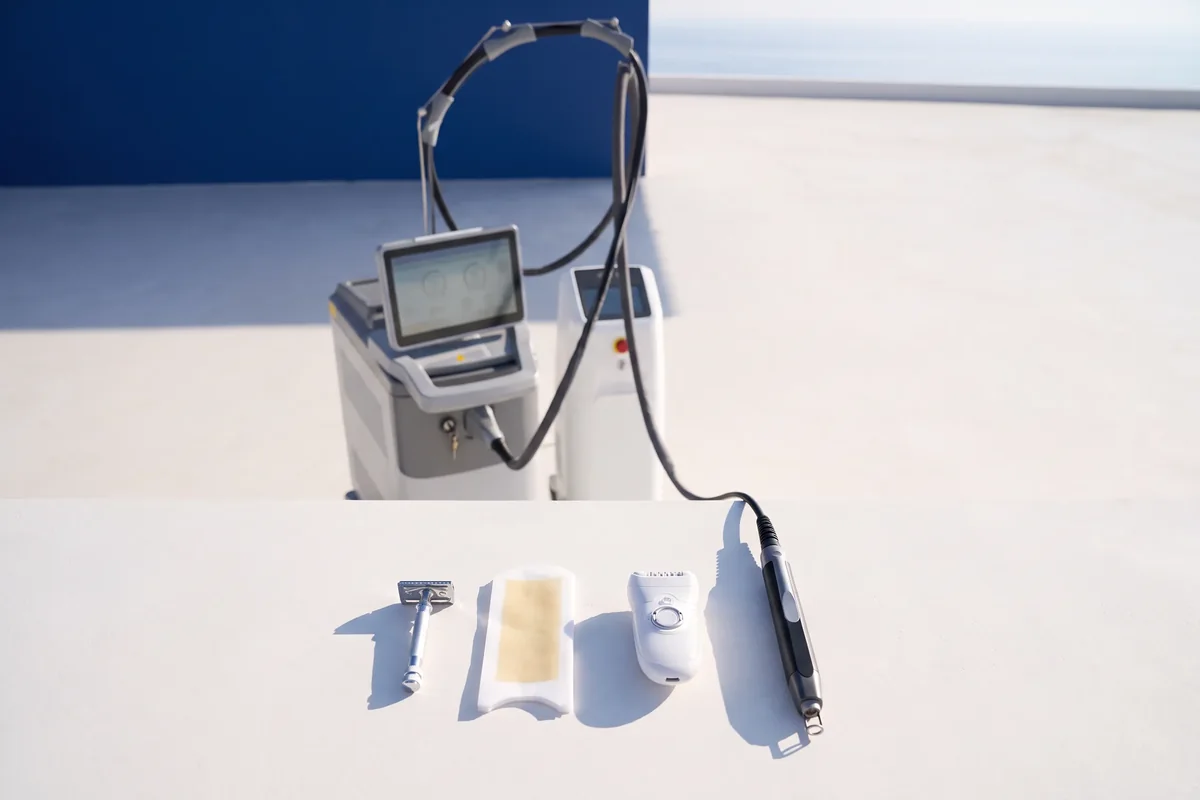
IPL is not a laser, but a broad-spectrum flashlamp technology. It is cheaper, less targeted, and not suitable for dark skin. Electrolysis treats each hair individually with a probe, works on all hair colours, and is impractical for large areas. Waxing, sugaring, and epilating pull the hair out by the root, with regrowth starting after three to six weeks. Hair removal cream and shaving only work on the surface. You can find a comparison of costs and sessions in our guide Permanent hair removal: methods compared.
How to minimise the downsides
- Start your course in autumn: By summer, most areas will be significantly reduced, and the break from the sun falls during the darker months.
- Stick to the intervals: If you push appointments back by months, you'll miss growth phases and need more sessions.
- Only shave, never wax: The root needs to stay intact between sessions, otherwise the laser won't have a target at your next appointment.
- Ask for two wavelengths: This allows the studio to adapt to tans and skin types instead of cancelling appointments.
- Clarify your expectations: Say what you want during your skin type check: completely smooth or just thinned out. Both are possible, but need different courses.
Checklist before your first appointment
| Question for you | Why it matters |
|---|---|
| Is my hair darker than my skin? | The laser needs contrast. Grey, white, and light blonde hair won't react. |
| Do I have time for eight to twelve appointments in a year? | Postponed appointments miss growth phases and prolong the series. |
| Can I avoid sun on the area for two weeks either side of each session? | A tan increases the risk of pigmentation and limits the energy. |
| Am I taking any medication that makes me sensitive to light? | Isotretinoin, certain antibiotics and St John's wort are reasons to pause or consult a doctor. |
| Am I pregnant or planning to be in the next few months? | We pause treatments during pregnancy as a precaution, not because of any proven harm. |
| Do I want to be completely smooth or just have less hair? | Both are possible, but require different series. Just let us know during your skin type check. |
| Can I avoid waxing for four weeks beforehand? | Without the root, the laser has no target. Shaving is allowed. |
If you can answer yes to all these questions, you're a great candidate and can expect the full benefits. If you're hesitating on two or three, just be open about it. During your skin type check, we'll figure out if a tailored series makes sense or if another method would suit you better.
What Laserazor does with this
Laserazor treats clients in six studios: Berlin Pestalozzistraße 13 and Danckelmannstraße 24 (both Charlottenburg), München Steinstraße 57 (Haidhausen) and Westendstraße 142, Augsburg Unter dem Bogen 2 and, from 26 October 2026, Hamburg Poststraße 36. In Berlin, München and Augsburg we use the Lutronic Clarity II (Alexandrit 755 nm and Nd:YAG 1064 nm), in Berlin and München also the DEKA Again Pro, and in Hamburg the Candela GentleMax Pro Plus. All machines are Class IIb medical devices with cooling right before each pulse. Underarms cost 48 €, bikini line 59 €, full intimate area 86 € and full legs 180 € per session in a 10-session package. Over 2.600 Google reviews with 5,0 stars show how much our clients love the everyday results, and the best price guarantee takes the risk out of comparing prices.
See the benefits for yourself: 0 € trial session
Skin type check, test pulses, and a complete zone for 0 €. After two to three weeks, you'll see the hair fall out, and only then do you make your decision.
Frequently Asked Questions
Is laser hair removal really worth it?
For people with dark hair who regularly shave or wax an area, yes: after eight to twelve sessions, the area is permanently hair-free, ingrown hairs disappear, and over ten years, laser is cheaper than waxing. It's not worth it for grey or very light hair.
What are the biggest downsides of laser hair removal?
The duration of the series over about one to one and a half years, the two-week break from the sun around each session, the lack of instant results, and the fact that grey and very light hair don't respond.
Is laser hair removal harmful to the skin?
Not with the right energy, cooling, and NiSV-certified expertise. Redness and minor swelling for a few hours are normal. Damage like burns or pigmentation spots almost only happens due to incorrect energy on dark skin, lack of cooling, or at-home devices without a skin type check.
How long do the results last?
Permanently. After your course of treatments, no hair reached by the laser will grow back in that zone. Hormones can trigger new growth, but a top-up session is usually enough then.
Is laser hair removal painful?
You'll feel a quick, warm pinch with each pulse – barely noticeable on your legs and underarms, but more distinct in the intimate area and on the upper lip. The cooling before each pulse takes away most of the heat. Nobody needs numbing cream.
Can I go straight back to work and exercise after the treatment?
Work, yes – there's no downtime. But skip sports, saunas, hot baths, and the sun on the day of your treatment, as sweat and heat will irritate your skin.
Why are multiple sessions needed?
The laser only works on hairs in the growth phase, and that's only 20 to 30 percent at a time per area. Each session catches a new group. That's why eight to twelve sessions are needed at intervals of six to eight weeks.
How much does laser hair removal cost compared to waxing?
Full legs cost 180 € per session in a 10-session package at Laserazor, so ten sessions are 1.800 €. Ten years of waxing with monthly appointments cost around 6.000 €. You can find the prices for all areas at laserazor.de/preise.
Is laser better than IPL?
Lasers emit a focused beam of light at a fixed wavelength and can be precisely adjusted to your hair pigment and skin type. IPL is a broad-spectrum flashlamp, works less precisely, and isn't suitable for dark skin. Dermatological reviews rate lasers as more effective and easier to control.
Sources
The expert statements in this guide are based on the following sources. For each source, you'll find who wrote it, when it was published and its status.
- Haedersdal M, Gøtzsche PC (2006). Laser and photoepilation for unwanted hair growth. Cochrane Database of Systematic Reviews, Issue 4, CD004684. systematic review (Cochrane). View source. Evaluates randomised trials: Alexandrit and diode lasers show a hair reduction of around 50 percent up to six months after treatment; data for IPL and Nd:YAG was thinner at the time. Long-term data over years was missing in the evaluated studies.
- Ibrahimi OA, Avram MM, Hanke CW, Kilmer SL, Anderson RR (2011). Laser hair removal. Dermatologic Therapy, Volume 24, pages 94 to 107. peer-reviewed review article. View source. Overview of mechanism of action, wavelengths (Alexandrit 755 nm, diode 800 to 810 nm, Nd:YAG 1064 nm), skin types, cooling and side effects; Nd:YAG is considered the safest choice for dark skin types.
- Gan SD, Graber EM (2013). Laser hair removal: a review. Dermatologic Surgery, Volume 39, pages 823 to 838. peer-reviewed review article. View source. Summarises research, side effects and treatment parameters; confirms the role of the hair cycle for the number of sessions.
- Anderson RR, Parrish JA (1983). Selective photothermolysis: precise microsurgery by selective absorption of pulsed radiation. Science, Volume 220, pages 524 to 527. peer-reviewed article. View source. Describes the principle behind all laser hair removal: light of a suitable wavelength and pulse duration specifically heats pigmented structures, while the surrounding tissue remains unharmed.
- Fitzpatrick TB (1988). The validity and practicality of sun-reactive skin types I through VI. Archives of Dermatology, Volume 124, pages 869 to 871. peer-reviewed article. View source. Defines the six skin types based on their reaction to the sun, which remain the basis for choosing wavelength and energy today.
- Federal Office for Radiation Protection (BfS) (continuously updated). Laser and IPL hair removal: Information from the Federal Office for Radiation Protection. bfs.de, optical radiation topic area. official information. View source. Explains the operating principle and risks (redness, pigment changes, burns from incorrect energy) and recommends application by qualified professionals.
- Federal Government (Regulation) (2018, in effect since 31.12.2020). Ordinance on Protection against the Harmful Effects of Non-Ionising Radiation in Human Applications (NiSV). Federal Law Gazette 2018 Part I, page 2034. statutory order. View source. Regulates who is allowed to use lasers and IPL on humans. For hair removal, proven expertise is mandatory; treatments that intentionally damage tissue are reserved for doctors.
- Laserazor (as of 9. September 2026). Laser hair removal price list, all 31 zones. laserazor.de/preise. own price list. View source. Single sessions and packages of 3, 5 and 10 sessions, valid in all studios, 24-month duration.
¹ 'Permanent' means: after a complete series, no hair that the laser has reached will grow back in the treated zone. No laser can reach grey, white and very light hairs. Hormonal changes can trigger new growth, in which case a top-up session is usually enough.

NiSV-certified specialists from the Laserazor studios in Berlin, München, Augsburg and Hamburg. They treat clients every day using Alexandrit and Nd:YAG lasers and write down exactly what they explain in the studio: no marketing fluff, just facts with sources.
This guide provides general information and doesn't replace medical advice, diagnosis or treatment. Laser hair removal is a cosmetic procedure; if you have skin conditions, take medications that increase light sensitivity, are pregnant or have unexplained hair growth, it makes sense to get medical advice first.

 Results and sessions