
















Why sensitive skin is a particular challenge
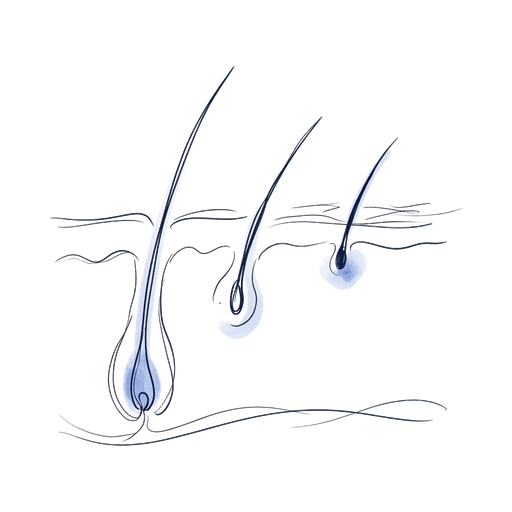
Sensitive skin reacts more strongly to external factors than normal skin types. For laser hair removal, this means: your skin might react more quickly with redness, swelling, or a burning sensation. The laser uses targeted light pulses that are absorbed by the melanin in the hair and converted into heat — this heat permanently destroys the hair root1. With sensitive skin, the protective barrier is often weakened, which can lead to more intense reactions.
The good news: Thanks to modern laser systems and Cryo cooling, the treatment can now be fine-tuned so precisely that even very sensitive skin usually tolerates it well; temporary redness may occur.
Which laser technologies are suitable for sensitive skin?
Not every laser is equally suitable:
- Alexandrit laser (755 nm): wavelength, ideal for light to medium skin types (Fitzpatrick I–III). Effective and precise, but can feel more intense on very sensitive skin.
- Nd:YAG laser (1064 nm): deeper penetrating laser technology for dark skin types (IV–VI) and particularly sensitive skin — less stressful for the upper skin layers.
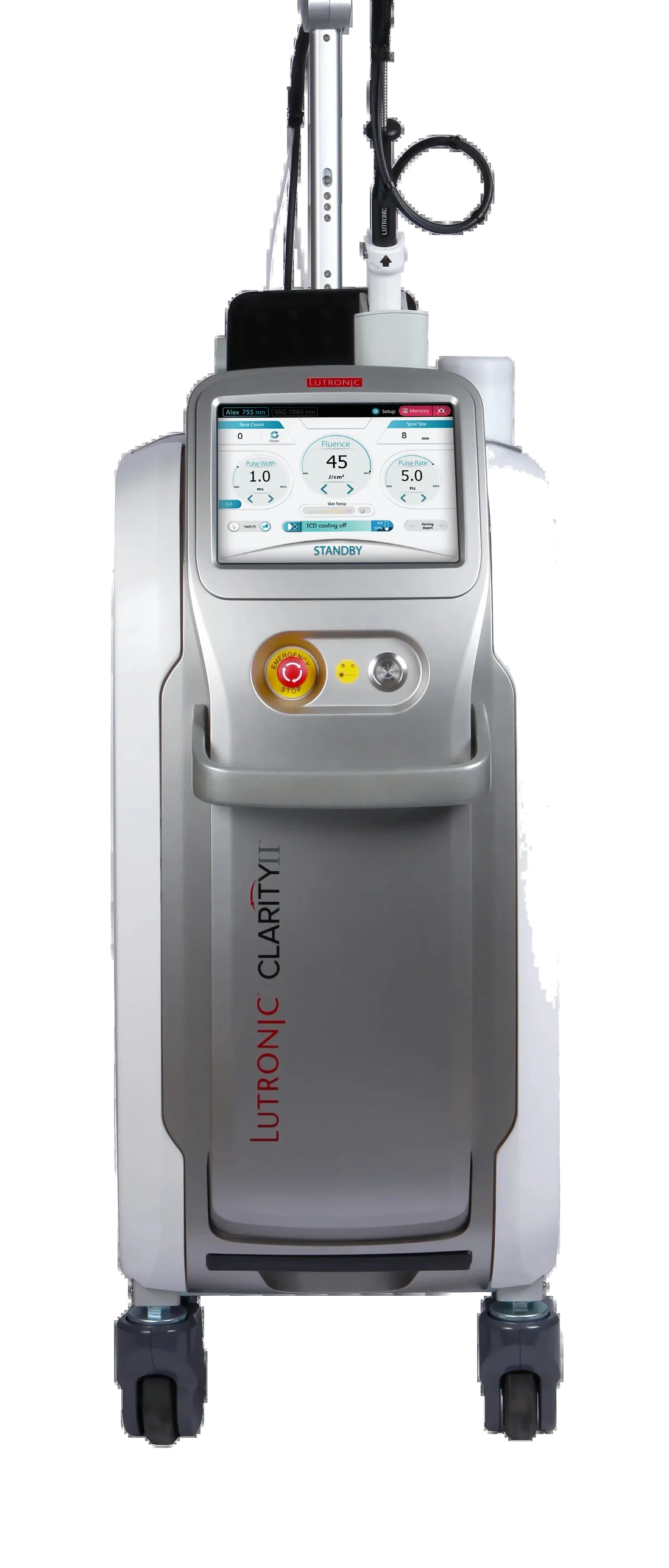
Laserazor uses a dual-laser system that combines both technologies. This allows our specialists to react flexibly during the treatment and adjust the intensity and wavelength individually. You can find details on choosing the right device in our guide Laser selection by skin type and Alexandrit vs. diode technology.
External Cryo cooling — why it makes all the difference
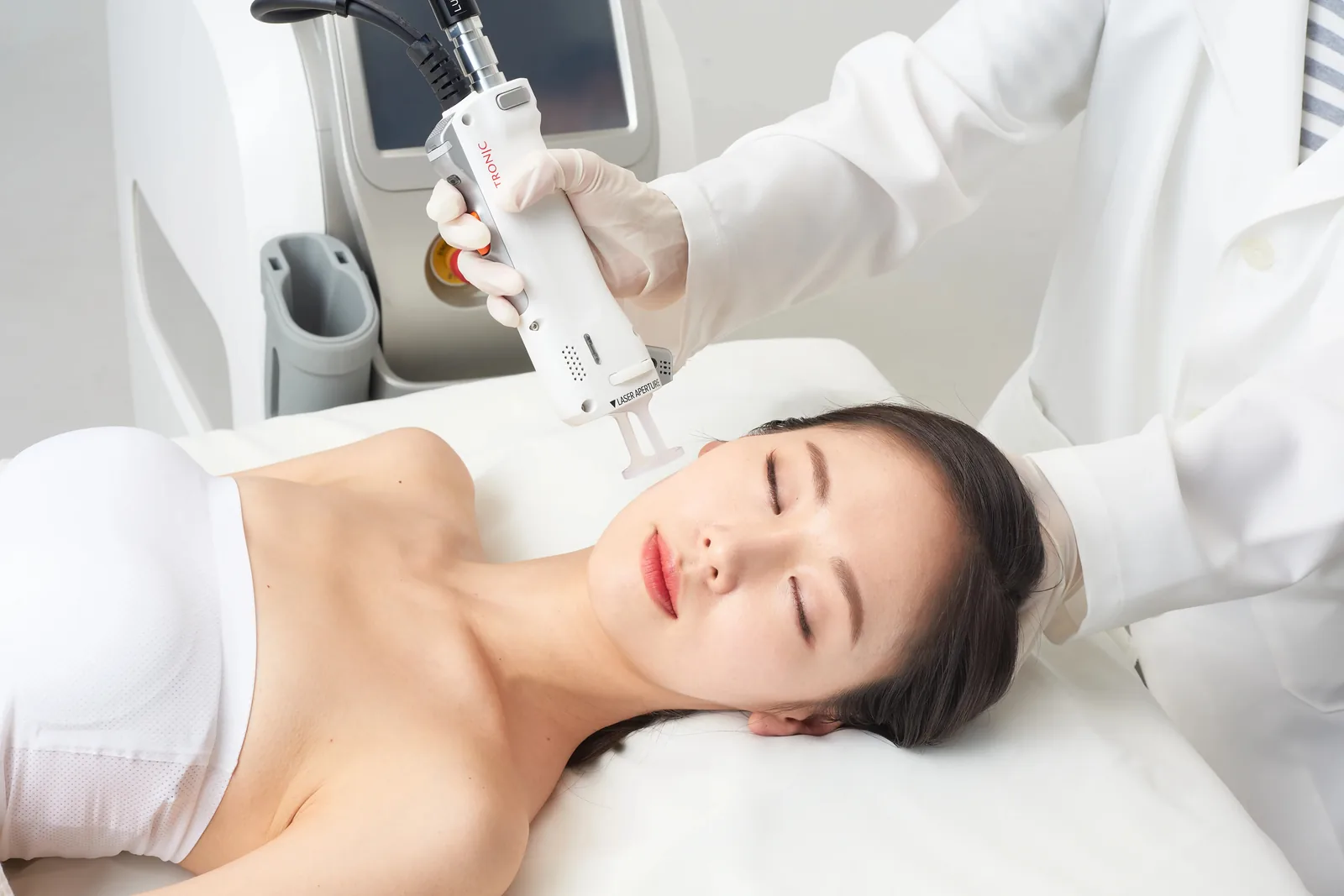
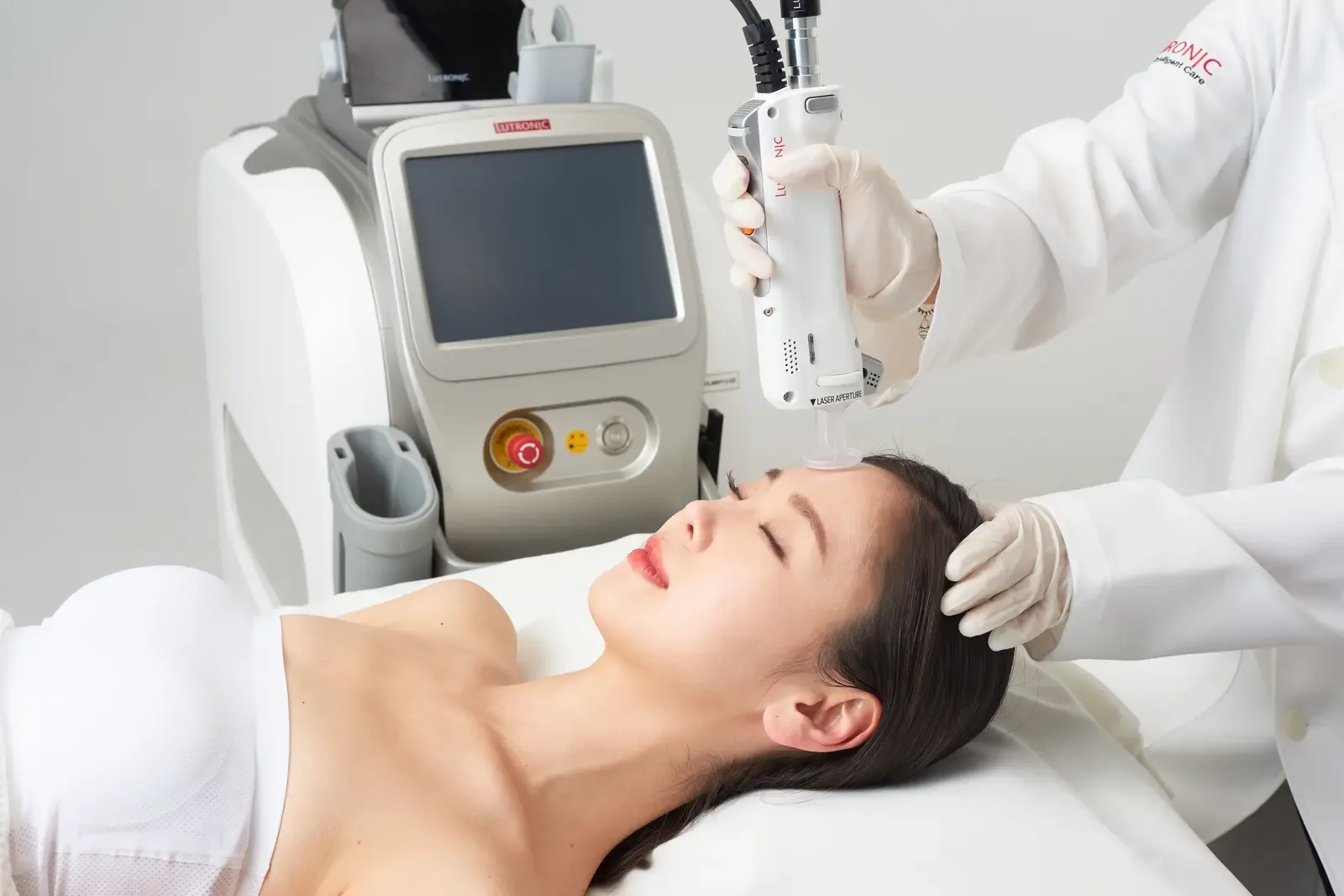
Cryo cooling is the most important tool for sensitive skin. During the treatment, the skin is cooled down to around 5 °C using an external cooling device — right before, during, and after every laser pulse. The cold constricts the blood vessels, reduces inflammatory reactions, and slightly numbs the nerve endings.
In practice, slight redness after treatments with external Cryo cooling usually fades completely within 24 hours. External cooling is much more effective than integrated cooling systems — read more in our guide to low-pain laser hair removal.
Preparation — how to protect your sensitive skin
- 2 weeks before treatment: no sunbeds, no direct sun, no fake tan.
- 1 week before treatment: no retinol, no fruit acids, no peels.
- 24 hours before treatment: shave the relevant area with a sharp razor and mild shaving cream — no waxing, no epilating.
- On the day of treatment: no creams, no deodorants, no make-up on the treated zone. Clean, dry skin.
- Medications: let our specialists know about any medications you're taking — antibiotics or St John's wort in particular can increase light sensitivity.
Detailed checklist in our preparation FAQ.
What happens during the treatment?
A typical session takes 10–45 minutes depending on the zone. The process:
- Skin is cleansed and checked for a proper shave.
- Laser intensity is adjusted individually — for sensitive skin, we deliberately start with low energy and increase it if well tolerated.
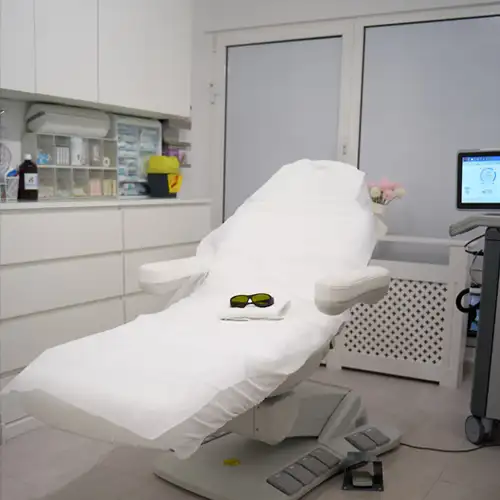
- External Cryo cooling is activated.
- Short laser pulses — feels like a gentle pinch.
- Cooling again after the treatment and a soothing lotion if needed.
Important: Open communication during the treatment. If you feel any discomfort, we'll adjust the intensity immediately. If you're unsure: book a free trial session with skin analysis first — we'll treat a small test area and you can experience the technology with no strings attached.
Aftercare & skincare for sensitive skin
- Immediately after the treatment: slight redness and warmth are normal — these usually subside within a few hours.
- Cooling: cold compresses or aloe vera gel without additives.
- Avoid for 48 hours: heat, saunas, hot baths, intense sports.
- Clothing: loose, breathable — especially after treating the underarms or intimate area.
- For 2 weeks: at least SPF 50 on treated areas.
- Skincare products: mild, fragrance-free products. No acids, no retinol, no alcohol for the first 48 hours.
Full list of recommended products in our aftercare FAQ.
Which body zones are particularly challenging?
Face & upper lip
The face is one of the most sensitive areas — the skin is thinner and has more blood flow. The upper lip in particular often reacts more sensitively because the skin lies directly over bone. We reduce the laser intensity and increase the cooling. After the treatment: no make-up for 24 h, strict UV protection.
Intimate area & bikini line
The intimate area is naturally very sensitive — thin, delicate, and often irritated by shaving. Our NiSV-certified specialists work with particularly fine settings and intensive cooling here. Details in our guide Laser hair removal in the intimate area — safely. After treatment: no tight underwear or synthetic fabrics for 1–2 days.
Underarms & reactive areas
The underarms are often irritated by shaving and deodorant. Our recommendation: have your treatment in the evening so your skin can regenerate overnight. No deodorant for 24–48 h after the treatment, especially nothing containing aluminium or alcohol.
How many sessions does sensitive skin need?
Usually 8–12 sessions — so no more than with normal skin. The difference is mostly in slightly longer intervals (4–8 weeks instead of 4) to give your skin more time to recover. Details on session planning in our sessions FAQ and on the scientific evidence in the fact check on permanent hair removal.
NiSV certification and CE marking — why it matters to you
The NiSV (MPAV §5): Non-ionising Radiation Protection Ordinance — the legal basis in DE since 2021 — dictates that only certified professionals are allowed to perform laser treatments. The CE marking on the devices meets European safety standards and guarantees regular maintenance. At Laserazor, only trained, certified professionals work with state-of-the-art equipment. Find out more about our NiSV-certified team.
Laserazor studios for sensitive skin
All six Laserazor studios (Berlin Pestalozzistraße, Berlin Danckelmannstraße, München Haidhausen, Augsburg) are equipped with dual laser systems and external Cryo cooling. Thanks to our laser flat rate from 99 €/month, your treatment stays predictable and affordable even with longer cycles.
Common myths — and what's actually true
- Myth: "The laser is too harsh for sensitive skin." → Reality: modern systems with Cryo cooling and adjustable settings are specially designed for all skin types.
- Myth: "Sensitive skin needs much longer breaks." → Reality: usually identical intervals — adjusting the intensity is what matters.
- Myth: "Redness means damage." → Reality: slight redness shows the laser is working — it fades within a few hours.